The Return
In 1915, I was working as a cook at Sloane Maternity Hospital. Twenty-five people fell ill. Two died. They traced it to me — or so they said. They arrested me again. This time, I would never leave North Brother Island.
By 1915, I had been cooking under the name "Mary Brown" for several years. I had worked in hotels, in restaurants, in a sanatorium. I had been careful — more careful than the stories suggest, more careful than a woman trying to earn a living in the only profession she knew had time to be. I had not stopped worrying about what the health authorities had told me. But I had also not stopped needing to eat, to pay rent, to live.
In late 1914 or early 1915, I took a position as a cook at Sloane Maternity Hospital on West 59th Street. A hospital kitchen: regular hours, decent wages, the kind of institutional stability that private household cooking couldn't offer. I had been working there for several weeks when the outbreak began.
Twenty-five staff members became ill with typhoid fever. Two of them died. The hospital's investigation turned quickly toward the kitchen. Within days, health authorities arrived and identified me as "Mary Brown." There was a brief moment — standing there in the hospital kitchen, watching the officers approach — when I understood that this time would be different. That there would be no negotiation, no appeal, no release with conditions. That I had used up whatever margin of possibility the system had been willing to extend to me.
I went back to cooking because it was all I had. It was who I was. Without it, I was nothing. And they punished me for trying to survive — as though survival itself, for a woman in my position, required apology.
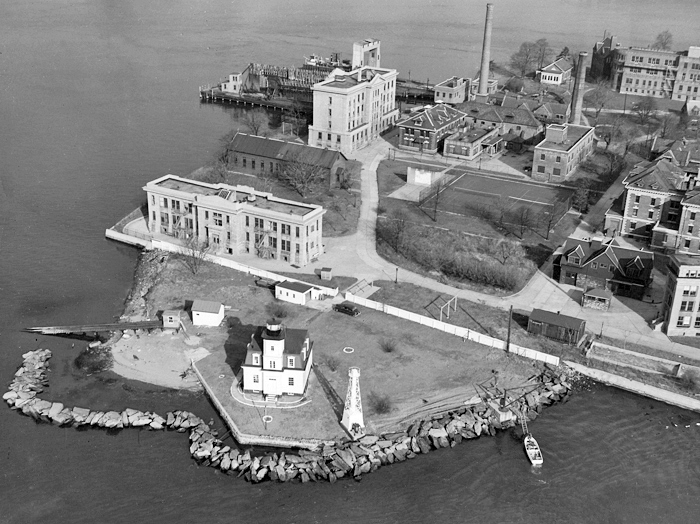
They took me back to North Brother Island on March 27, 1915. I was forty-five years old. I had been a professional cook for thirty years. I would spend the next twenty-three years on that island. I would never work as a cook again. I would never live anywhere else.
What Actually Happened at Sloane Hospital
I want to examine the Sloane Maternity Hospital outbreak carefully, because it has been used to confirm the narrative that I was a reckless, dangerous woman who willfully disregarded the safety of others. The reality, as with most things in my story, is considerably more complicated.
Twenty-five people fell ill. Two died. These are facts. What is less clearly established is whether I was definitively the source of the outbreak, or whether I was simply the most convenient explanation for it.
Hospitals in 1915 were not hygienic environments in the ways we would now consider basic. Water supplies were inconsistently safe. Other staff members could have been undetected carriers. Kitchen sanitation practices, by modern standards, were primitive. The investigation that followed my arrest was conducted by authorities who had already identified their prime suspect and had strong institutional incentives to close the case quickly and definitively.
I am not claiming I definitely did not cause that outbreak. I am claiming that the investigation was insufficiently rigorous to establish that I definitely did — and that the legal, professional, and personal consequences I suffered were grossly disproportionate to what was actually proven.
Why a Hospital
The newspapers at the time made much of the fact that I had taken a position in a hospital — as though this demonstrated particular recklessness or malice. "Typhoid Mary" in a hospital kitchen, they wrote, as though I had chosen the location to maximize harm.
What they didn't write was that hospital work was among the most stable, best-paid institutional kitchen positions available to a cook with my qualifications. The wages were regular. The conditions were consistent. The institutional structure meant I would not be dismissed without cause or let go at the end of a season. For a woman in my economic circumstances, hospital work was not the reckless choice. It was the sensible one.
I also want to address the question of hospital patients directly. Hospital kitchen staff in 1915 did not typically prepare food for patients — that was done separately, by different staff, under different conditions. The kitchen where I worked served primarily the hospital's staff: doctors, nurses, administrative workers. This doesn't eliminate the risk my presence posed, but it does complicate the narrative of me as someone who deliberately targeted the vulnerable.
They called it defiance. Recklessness. They said I had willfully endangered others. But they didn't understand, and they didn't want to. I had tried to survive in the only way available to me. And they punished me for it with the rest of my life.
No Possibility of Appeal
When they returned me to North Brother Island in 1915, there was no hearing. No judge considered my case. No lawyer argued on my behalf. No process was followed that a person from a different social class, with different resources, might have been able to access. I was identified, arrested, and confined. The end.
Commissioner of Health Dr. Hermann Biggs made clear, through statements to the press and internal communications that have since been published by historians, that I would not be released again. My first release had been a mistake in his view — a moment of misplaced sentiment that had resulted in exactly the outcome he had feared. I was now a policy case as much as a medical one. Releasing me would have been an admission that the first release had been wrong, which the department was unwilling to make. I was going to stay on North Brother Island regardless of what I did or said or appealed.
What I Wish I Had Done Differently
People ask whether I regret it. Whether I wish I had made different choices. I think about this question more than I might like to admit.
I don't regret the cooking. I was a cook. Cooking was not just a job; it was who I was. The idea that I should have spent the last thirty years of my productive life doing something else, poorly, in poverty, while my actual skills atrophied and my actual identity slowly disappeared — no. I don't accept that as the obviously correct choice that everyone seems to think it was.
What I regret is the hospital. Not because of the legal consequences — I suspect I would have been caught eventually regardless of where I was working. But because I understand, now, the specific vulnerability of the people who work in healthcare settings, and I wish I had given that more weight. I was trying to survive. I was not trying to harm anyone. Those two things are both true, and they exist in genuine tension that I cannot resolve with a simple verdict on my own conduct.
What I don't regret is existing. I was born into a world that had little use for me, that gave me nothing, that tried repeatedly to erase me. I survived for sixty-nine years. I worked, I loved, I resisted, I endured. The people who put me on that island wanted me to be a cautionary tale. I want to be something more complicated than that — and I was, and I am.